

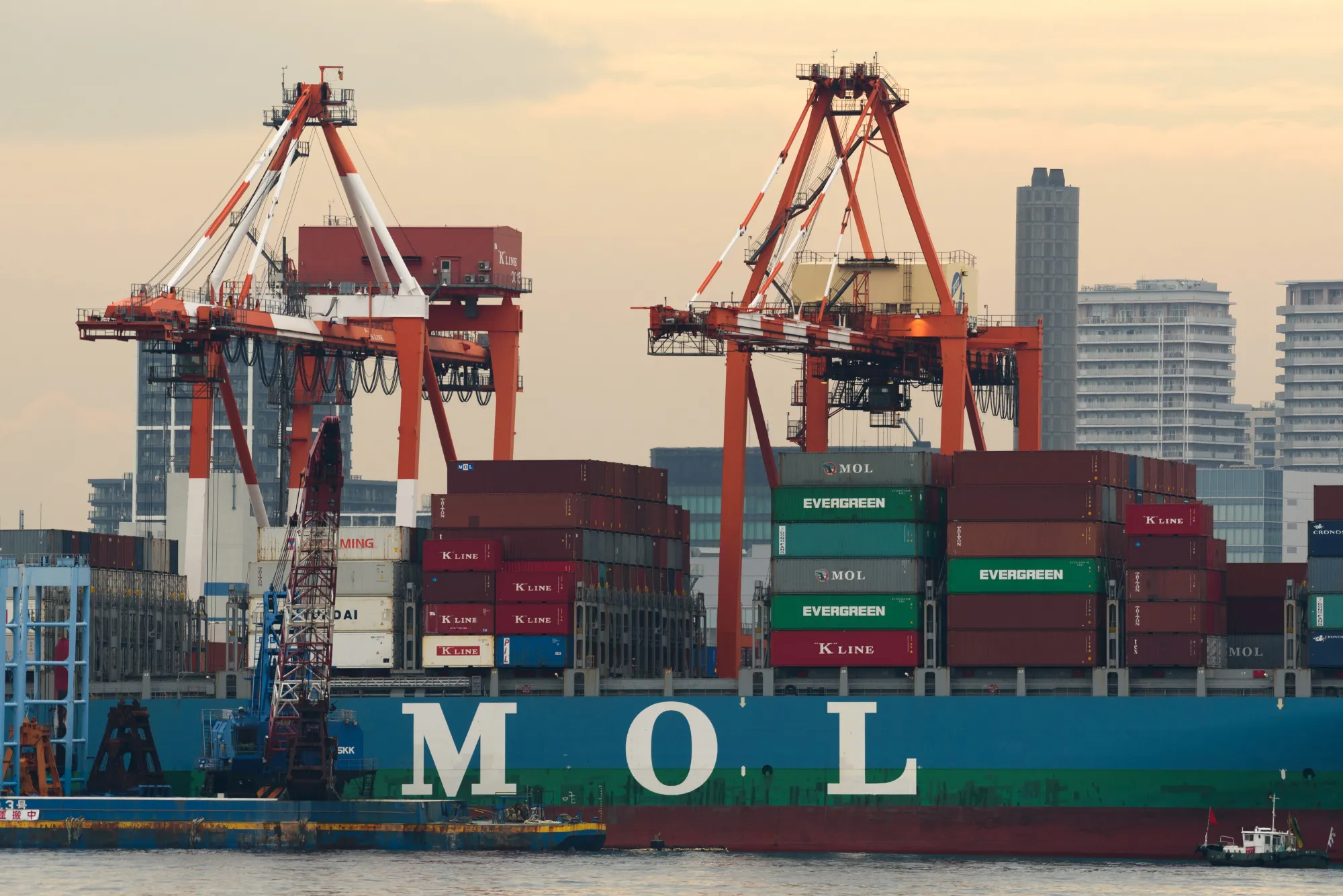
We have begun providing regular analyses of various situations where other activists are involved. Mitsui OSK is one such case. With a market cap of US$12.4bn, and liquidity of $170m+/day, it is big and liquid enough for large funds to accumulate a position. That was no doubt an attractive feature for Elliott Management, which has said it owns a “significant” stake – but presumably below 5% as Elliott has not filed as substantial and does not appear publicly on the register.
This opportunity looks to have potential for above-market returns through realisation of excess cash and real estate holdings to improve cash returns to shareholders.
Since Elliott’s involvement, the company is reportedly considering realising cash via establishing a REIT to hold its property portfolio.
The company’s ~1/3 ownership in containership JV Ocean Network Express is another source of value. ONE holds large cash reserves as a result of the pandemic-era boom in container shipping rates, and has been distributing this via special dividends. Other major ONE owner K-Line (Kawasaki-Kisen Kaisha), is effectively controlled by activist Effissimo via its ~40% stake.
There is also a peer-shaming angle here. Fellow ONE owners K-Line and Nippon Yusen have reduced their shares outstanding by 25%, 20% respectively over the last three years, while Mitsui OSK has only bought back 5%.
Mitsui OSK’s mid term plan offers a total payout ratio (divs + flexible buybacks) of 40% currently. Not exactly super-generous, especially as it is not buying new containerships – that is ONE’s responsibility.
It does not offer huge return potential absent a significant cyclical swing in its various shipping verticals, but the risk / reward appears favourable due to support for the share price on the downside from the company’s very overcapitalised balance sheet, and Elliott’s engagement. The company is already experiencing a favourable environment for its energy tanker vertical due to the Iran conflict.
There is also optionality in Elliott increasing its stake further and launching a full public campaign. So far the public comments from Elliott have been quite mild and friendly.
The Business
Mitsui OSK owns ships, terminal facilities, and logistics businesses across various shipping verticals.
- Dry Bulk
- Energy (OIL & LNG Tankers)
- Container Shipping
- Car Carriers
- Ferry, Domestic roll-on / roll-off, and Cruise ships
Additionally, the company owns the real estate business Daibiru. Daibiru was previously a listed subsidiary of Mitsui OSK, but was privatised in 2022.
From the 2025 Yuho (2026 not yet available. Note, machine translated):

Note the containership segment generated a disproportionate level of profit vs its share of segment assets, and the real estate business a very low level of profitability vs assets.
The container ship segment profit is primarily comprised of charter payments from ONE and
the equity-accounted share of profits from ONE, as all Mitsui its partners’ ships are on long-term charters to ONE, allowing it to operate a combined fleet at scale.
The Assets
Picking apart the balance sheet, we have attempted a rough valuation of the key assets,
including the proportionate share of ONE’s assets. For ONE, the balance sheet is only reported annually, and I have used the most recent report (March 2025), adjusting cash for the special dividend paid.
The most rubbery area is the valuation of ONE’s long-term charters which effectively give it
ownership of the ships in exchange for annual payments.
The cost to build a container ship has significantly increased since the JV was formed, and ONE has been investing in buying newbuild ships.
We used AI to value ONE’s ships based on the tonnage and current prices, but I did not have
good data around average age, so deferred to AI’s assessment.
All figures are in US$:

The net valuation of these identifiable assets provides considerable support for Mitsui OSK’s $12.4bn market cap. Note, that this ignores other operational infrastructure such as warehouses, terminal facilities etc. I recommend investors do their own work around the value of ONE’s ships, as this is the biggest swing factor in the sum of the parts.
We are likely significantly understating the market value of Mitsui OSK’s remaining owned ships by using book value. Also, the real estate value is as per the auditors assessment of market value of leased assets. This is typically taken from the government land tax registry rather than an appraiser’s valuation, and can significantly understate the valuation of attractive assets, of which Daibiru owns many.
Summary
There is a supportive asset base, considerable scope to free up cash for increased shareholder returns, and Elliott are on the register pushing for better asset utilisation.
Shipping rates are turning up across the board, but a chunk of this is higher bunker costs. Energy carriers are a particular hotspot though. Shipping is a highly cyclical industry, which is always a concern when considering an investment. That said, none of the verticals are exactly booming, other than perhaps energy.
The company is reported to be establishing a private REIT which will presumably raise money from investors to buy the company’s holdings, so it appears Elliott’s engagement is already having an impact.
This is not too surprising, as the shareholder register is wide-open, so management is susceptible to shareholder pressure.
Overall, we see a reasonably attractive opportunity, with potential for above-market returns, and positive optionality.
Of course, a global recession would be very negative for this highly cyclical business, but there
is the underlying asset value that should provide some support.
In the midst of the current AI-eats-the-world environment, such hard assets could prove attractive to investors.

